

US Healthcare Waiting Room Statistics (2026)
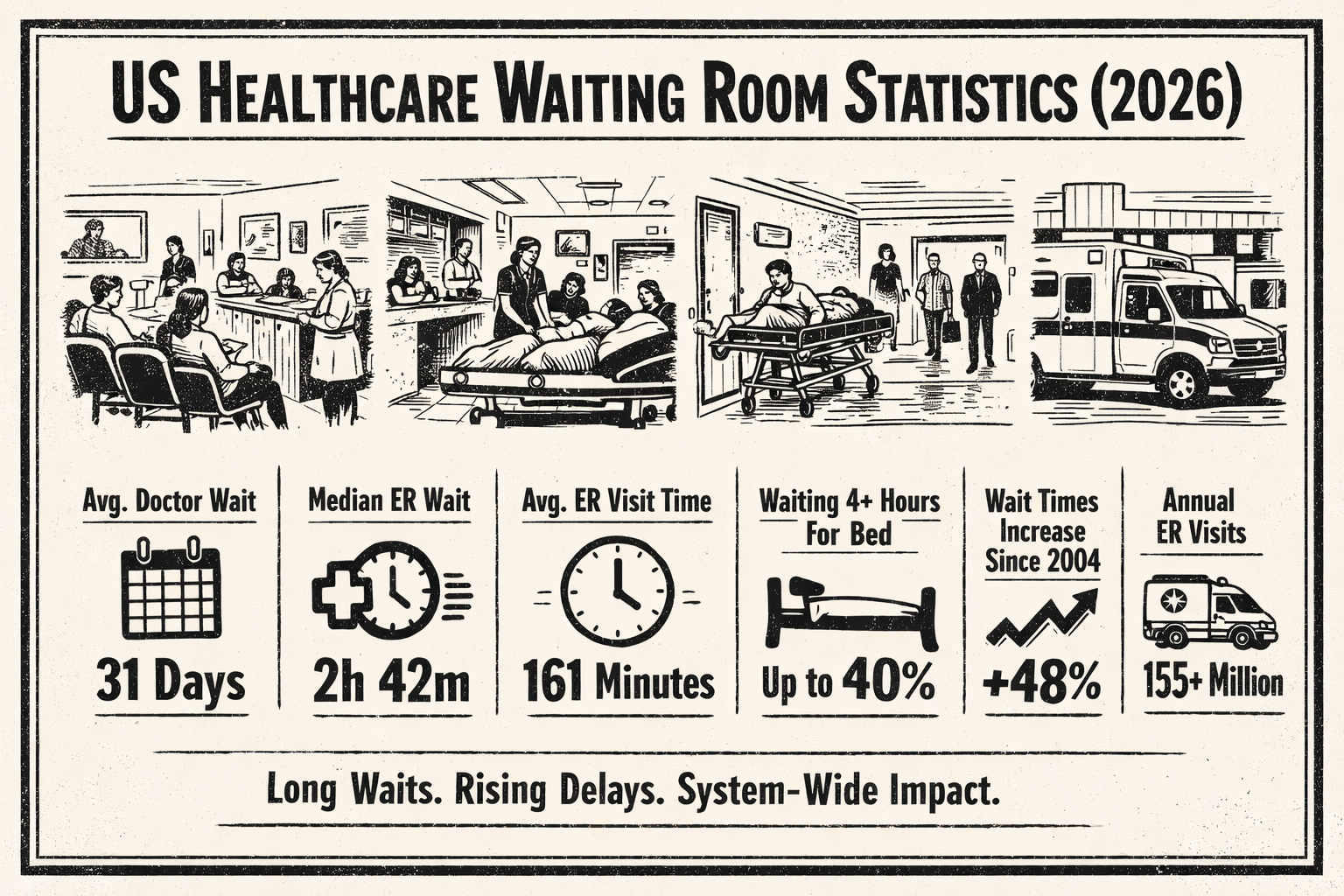
ER Delays, Hospital Wait Times & Patient Trends
Quick Stats: US Healthcare Waiting Times
Average doctor appointment wait: 31 days
Median ER wait time: 2 hours 42 minutes
Average ER visit duration: 161 minutes
Patients waiting 4+ hours for a hospital bed: up to 40%
Increase in wait times since 2004: +48%
Annual ER visits: 155+ million
Key insight: Waiting in US healthcare isn’t just long — it’s increasing, systemic, and affecting every stage of the patient journey.
How Long Do Patients Wait in US Healthcare?
Doctor Appointment Wait Times
Patients in the United States now wait over a month on average to see a physician.
Primary care: ~26 days
Specialists: 30–45+ days
Some major metro areas exceed 50 days
This creates a hidden queue before patients even arrive, contributing to overcrowding later in the system.
Emergency Room Waiting Times
Emergency departments are where waiting becomes most visible — and most critical.
Median ER wait: 2h 42m
Time before seeing a clinician: often 60+ minutes
Only ~40% of patients are seen within 15 minutes
Peak periods regularly exceed 3–4 hours total time
For patients, this isn’t just inconvenient — it can directly impact outcomes and satisfaction.
Hospital Admission Delays (Boarding)
Once a patient is admitted, the wait often continues.
Up to 40% wait over 4 hours for a bed
Some cases exceed 24 hours
“Boarding” in ER corridors is increasingly common
💡 This is where internal queue systems break down — patients are technically admitted but still waiting.
Why US Healthcare Waiting Times Are Increasing
1. Rising Patient Demand
Over 155 million ER visits annually
Ageing population increasing service pressure
Non-urgent visits making up a significant portion
2. Staffing Shortages
Shortage of doctors, nurses, and support staff
Increased burnout leading to reduced capacity
Fewer available appointment slots
3. Inefficient Patient Flow
Most healthcare systems still rely on:
Manual check-ins
Static waiting rooms
Limited visibility of queue position
Result: bottlenecks at every stage
The Real Impact of Waiting in Healthcare
Financial Impact
Fewer patients seen per day
Increased no-shows
Reduced operational efficiency
Patient Experience Impact
Anxiety increases the longer patients wait
Perceived quality of care decreases
Patients are more likely to switch providers
Studies show over 50% of patients would consider changing providers due to long waits
Operational Impact
Overcrowded waiting rooms
Staff overwhelmed during peak times
Increased risk of errors and delays
How Healthcare Providers Can Reduce Waiting Times
1. Digital Queue Management Systems
Replacing physical queues with virtual queue systems allows:
Patients to join remotely
Real-time updates on wait times
Better control of patient flow
2. Virtual Waiting Rooms
Instead of crowded waiting areas:
Patients wait from their phone
Receive updates as they move forward
Arrive only when needed
This reduces:
Overcrowding
Patient anxiety
Staff interruptions
3. Smarter Patient Flow Management
Prioritisation based on urgency
Better visibility for staff
Real-time queue adjustments
Why This Matters More Than Ever
Healthcare is no longer judged purely on clinical outcomes.
Patient experience is now a key differentiator
And waiting time is one of the biggest drivers of dissatisfaction.
The Future of Healthcare Waiting Rooms
The traditional waiting room is being replaced by:
Virtual queues
Mobile-first patient journeys
Real-time communication
Forward-thinking providers are already:
Reducing waiting times
Improving satisfaction
Increasing operational efficiency
Bringing It Together: Smarter Queue Management
A digital queue management system can transform healthcare waiting by:
Reducing unnecessary physical queues
Giving patients transparency and control
Helping staff manage demand more effectively
For healthcare providers looking to improve flow, reduce delays, and enhance patient experience, adopting a modern queue system is no longer optional — it’s essential.
FAQ: US Healthcare Waiting Times
What is the average ER wait time in the US?
The median emergency room wait time is approximately 2 hours and 42 minutes, though this varies by hospital and time of day.
How long does it take to get a doctor’s appointment in the US?
On average, patients wait around 31 days, with longer delays for specialists.
Why are healthcare waiting times increasing?
Key factors include rising demand, staffing shortages, and inefficient patient flow systems.
How can hospitals reduce waiting room times?
Hospitals can reduce waiting times by implementing digital queue systems, virtual waiting rooms, and improved patient flow management.